
AC Condensate Drain Warning Signs Lakeland Homeowners Should Never Ignore
Water around your indoor air-conditioning system may look like a minor inconvenience, but it can indicate a clogged or malfunctioning condensate drain. In Lakeland’s humid climate, that small drainage problem can shut down your AC, damage ceilings or flooring, and turn into an urgent repair if it is ignored.
Quick Answer: What Are the Signs of a Clogged AC Drain?
Common warning signs include water near the indoor air handler, a full drain pan, an AC system that suddenly shuts off, musty odors, visible buildup around the drain opening, water stains, and unusual indoor humidity. If water is spreading or threatening your home, turn the cooling system off and arrange professional service.
What Does Your AC Condensate Drain Do?
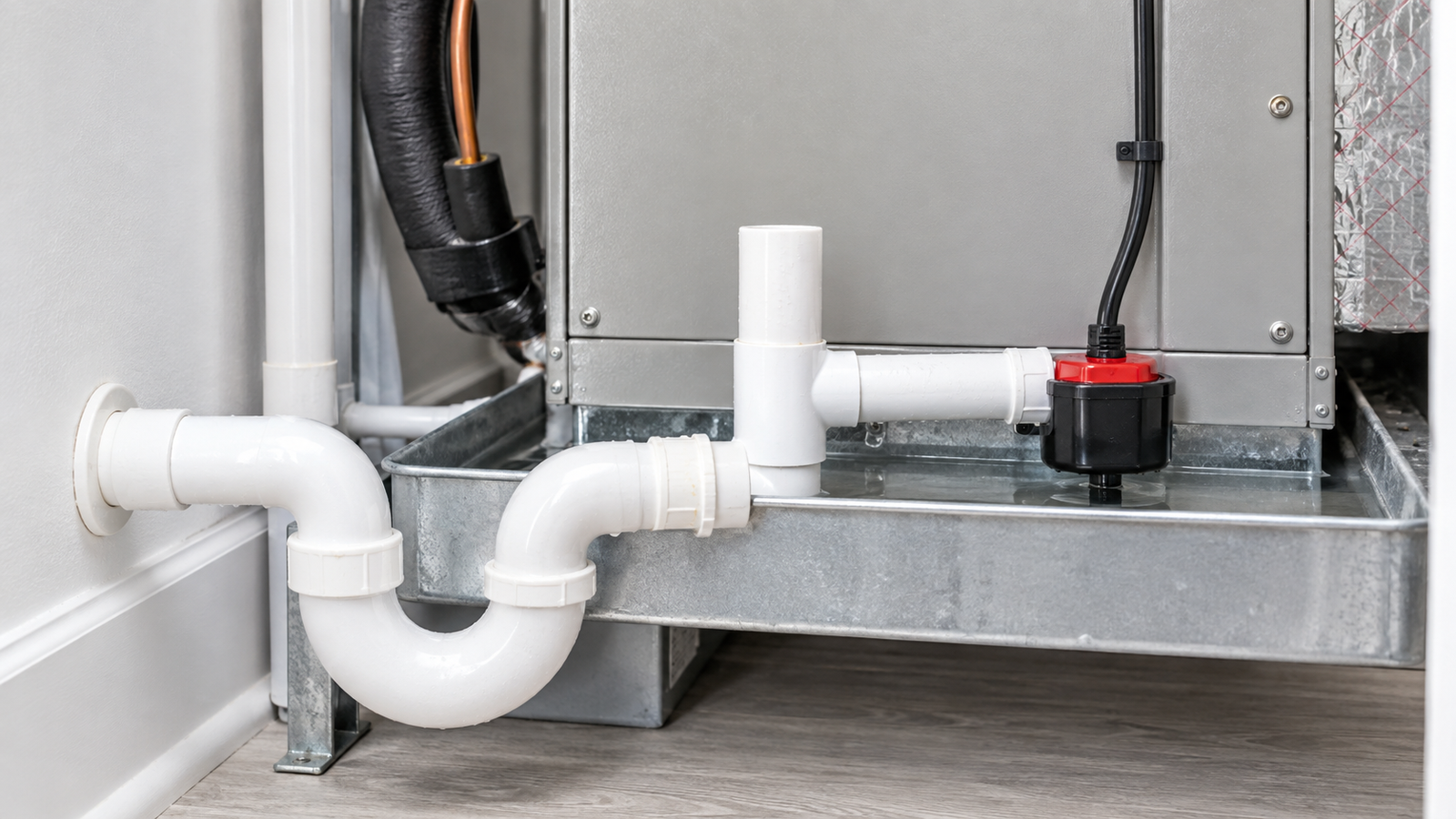
Your air conditioner does more than cool the air. It also removes moisture from your home. As warm indoor air moves across the cold evaporator coil, moisture condenses into water. That water falls into a drain pan and exits the property through the condensate drain line.
Because Lakeland experiences extended periods of heat and humidity, local air conditioners can produce substantial condensation. During long cooling cycles, the drainage system must continuously move that moisture away from the indoor equipment.
Dirt, dust, biological material, and other debris can gradually accumulate inside the drain. Once the restriction becomes severe enough, water may back up into the drain pan or overflow around the air handler.
Seven Warning Signs of a Clogged AC Condensate Drain
1. Water Around the Air Handler
Water collecting around the indoor equipment is one of the clearest warning signs. The cause may be a clogged drain, overflowing pan, damaged connection, or melting ice from a frozen evaporator coil.
2. Your AC Suddenly Shuts Off
Many systems have a float switch that turns the air conditioner off when rising water indicates a drainage problem. The shutdown helps limit overflow damage, but the underlying problem still needs attention.
3. The Drain Pan Remains Full
A drain pan that stays full while the system operates may mean that condensation is not leaving through the drain line properly. Rust, cracks, or pan deterioration can create additional leakage.
4. Musty or Damp Odors
Standing water and organic buildup can produce musty odors near the indoor unit or through the air vents. Because odors can have several causes, the system may need to be inspected.
5. Ceiling or Wall Stains
When an air handler is installed in an attic or elevated space, overflowing water may appear as discoloration, bubbling paint, damp drywall, or stains on the ceiling below.
6. Unusually High Indoor Humidity
A drainage problem can appear alongside frozen coils, restricted airflow, or poor moisture removal. These conditions can leave a Lakeland home feeling warmer, damp, or unusually sticky.
7. Repeated Drain-Line Backups
A line that repeatedly clogs may have persistent buildup, incorrect slope, poor routing, or another condition that requires more than a temporary surface cleaning.
Why AC Drain Problems Are Common in Lakeland
Lakeland’s long cooling season requires many air-conditioning systems to operate for extended periods. Each cooling cycle can produce condensation, especially when Florida’s outdoor humidity is high.
Frequent moisture creates favorable conditions for buildup inside a drain line. Dust and debris entering the wet drainage system can contribute to restrictions. Air handlers installed in garages, closets, or attics may also go unnoticed until water appears in another part of the home.
Routine AC maintenance in Lakeland gives a technician an opportunity to inspect drainage conditions before a backup creates an active cooling problem.
What to Do When You Suspect a Clogged Condensate Drain
Look for Visible Water
Check around the indoor air handler, drain pan, nearby flooring, and the ceiling underneath attic-mounted equipment. Do not remove service panels or touch wet electrical components.
Check the Thermostat and System Status
If the thermostat is calling for cooling but the system has stopped, a triggered float switch may be involved. Electrical, thermostat, and equipment failures can produce similar symptoms.
Turn the System Off if Water Is Spreading
Stopping the cooling cycle can limit additional condensation while you protect the surrounding area and arrange service.
Request Professional Diagnostics
A technician can inspect the drain line, drain pan, float switch, evaporator coil, airflow, and other conditions that may be contributing to the leak.
Can You Clear an AC Drain Line Yourself?
Some homeowners attempt to clear a drain through an accessible exterior termination or approved cleanout. However, pushing objects into the pipe, applying excessive pressure, or pouring harsh chemicals into the line can damage drainage components or move the obstruction deeper.
Water near the air handler may also come from something other than a simple clog. A frozen evaporator coil, cracked drain pan, loose connection, failed condensate pump, incorrect drain-line slope, or damaged insulation can cause similar symptoms.
If the system has shut down, the drain repeatedly backs up, or water is threatening your property, professional AC repair in Lakeland is the appropriate next step.
What an HVAC Technician Checks
A professional evaluation should identify where the water originates instead of assuming that every leak has the same cause.
The inspection may include:
- Primary and secondary drain pans
- Condensate drain line and accessible cleanout
- Float switch and overflow controls
- Drain connections, fittings, and visible damage
- Evaporator coil condition and possible ice buildup
- Air filter, airflow, and blower operation
- Condensate pump operation when one is installed
- Drainage flow after approved service is completed
The objective is to correct the actual cause and confirm that condensation can drain correctly before the air conditioner returns to regular operation.
How to Reduce the Risk of Future Drain Clogs
Although no maintenance plan can prevent every HVAC problem, several practical steps can reduce the likelihood of an unexpected condensate backup:
- Replace or clean the air filter according to the system’s requirements.
- Keep the area surrounding the indoor equipment clean and accessible.
- Do not ignore recurring moisture near the air handler.
- Schedule preventive maintenance before heavy cooling demand.
- Have repeated drain clogs checked for installation or routing problems.
- Confirm that attic-mounted equipment has suitable overflow protection.
Condensate-drain care is particularly important in Central Florida because air conditioners run frequently and remove moisture for much of the year.
Frequently Asked Questions
Why is water leaking from my air conditioner?
Possible causes include a clogged condensate drain, damaged drain pan, loose connection, failed condensate pump, frozen evaporator coil, or another airflow or drainage problem. An inspection is needed to identify the source.
Can a clogged condensate drain stop my AC?
Yes. When the system has an operating float switch, rising water may activate the switch and stop the air conditioner to help prevent an overflow.
Is a clogged AC drain an emergency?
It can become urgent when water is spreading, leaking through a ceiling, approaching electrical equipment, or leaving the property without cooling during extreme heat.
Why does my AC drain line keep clogging?
Repeated restrictions may involve biological buildup, debris, drain-line routing, improper slope, or another system condition. Recurring backups should be professionally evaluated.
Can an overflowing drain damage my home?
Yes. Overflowing condensation can damage drywall, ceilings, insulation, flooring, cabinets, and nearby belongings. Persistent moisture can also contribute to odors and unwanted biological growth.
How do I schedule AC service in Lakeland?
Call Central Air of Florida at (863) 262-9999 for an urgent concern or use the online scheduling page to request service.
Water Collecting Near Your AC System?
Central Air of Florida provides AC diagnostics and condensate-drain service for homes and light commercial properties in Lakeland, Polk County, and nearby Central Florida communities. Request service before a drainage problem causes additional water damage or a complete cooling shutdown.
Florida HVAC License CAC1824891